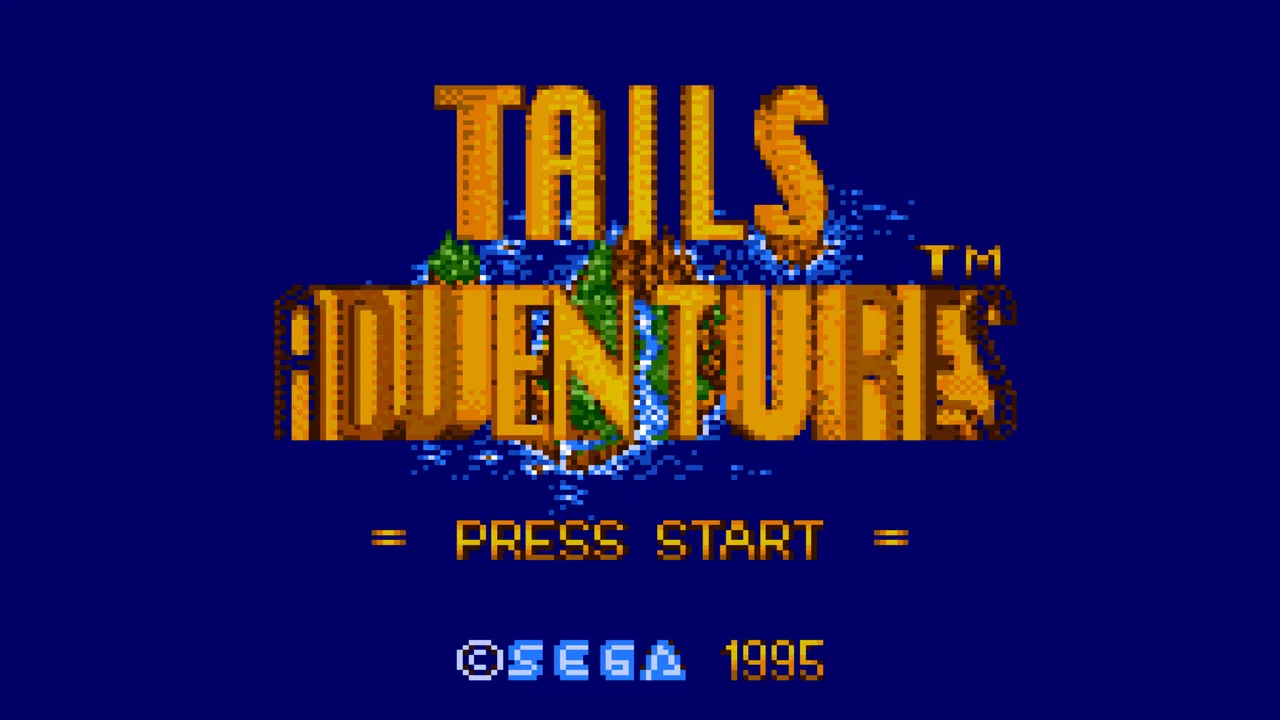
Tails Adventure
- 3.9
- Rating
- 100.00K
- Installs
- Free
- Price

 Analysis by App-foxy
I approached Tails Adventure as a small adventure game rather than something to play for a few minutes and immediately forget. Developed by mechakotik, it presents itself as a free action-adventure platformer built around exploration. That description is brief, but it points to the game’s main appeal: moving through a world, testing routes, and deciding whether a suspicious-looking corner is worth investigating.
My first impression was positive because the game does not need a complicated explanation to make its basic idea understandable. You explore, handle platforming challenges, and gradually become more familiar with the spaces around you. It feels aimed at players who enjoy curiosity as much as speed. If you prefer games where every moment is a direct race toward the next objective, this may feel slower. If you like checking side paths and learning how an environment fits together, it has a more inviting rhythm.
From the first week to the question of lasting value
The first week is where the game makes its strongest case. A free download removes the usual barrier to trying it, and the Everyone 10+ rating makes it an approachable choice for younger players and families who want an adventure without an adult-oriented presentation. It is also a practical option for older Android devices, since the minimum requirement is Android 5.0.
You May Also Like

 AccuWeather: Weather Radar
AccuWeather Review: A Quick, Clear Forecast for Everyday Decisions
For everyday plans, the best forecast is the one you can understand quickly. AccuWeather makes rain timing, radar, and local conditions easy to act on, with a few trade-offs.

 Hill Climb Racing
Why Hill Climb Racing Still Turns Crashes Into One More Run
A tiny car, a bumpy hill and one more upgrade: Hill Climb Racing keeps resurfacing because its simple chaos makes every near-miss feel personal.

 AliExpress - Shopping App
AliExpress Makes Global Shopping Feel Personal, but Shoppers Bear the Risk
AliExpress turns a global marketplace into a pocket-sized discovery engine. Its reach is useful, its shopping loop compelling, and its trade-offs easy to miss.

 Lords Mobile: Kingdom Wars
Lords Mobile Is a Kingdom-Building Routine, Not a Quick Match
A case-by-case verdict on the building, battles, device demands, and social commitments that make Lords Mobile rewarding for some players and exhausting for others.

 PDF Scanner app - TapScanner
TapScanner Makes Paperwork Easier to Capture, Check, and Share
TapScanner makes scanning with a phone feel less like a rescue operation and more like a dependable step in getting work done. Its capture tools are useful, though not flawless.

 Block Blast!
 Shows How Much a Puzzle Game Can Leave Out
A quiet grid game shows why puzzle players increasingly value instant clarity, repeatable skill and low-pressure play—and where the genre still needs to catch up.
More From Our News Desk
View All News


I would not judge it solely by the opening session, though. Exploration games often create a strong early feeling of discovery, then become less compelling once the player understands the basic rhythm. With this title, the important question is whether returning to it still feels like uncovering something meaningful, rather than repeating a route simply because there is nothing else to do.
That distinction matters in an everyday situation. Imagine having twenty minutes after work or school and wanting something more involving than a quick arcade round, but not wanting to commit to a large role-playing game. This is the kind of game I would try in that gap. I could enter, explore at my own pace, and stop when I had reached a natural pause. It is less suitable when I want a highly structured session with a clear competitive result.
What makes exploration work here
The most useful way to play is to treat each area as a small investigation. Instead of rushing toward the most obvious platform, I recommend looking for the visual clues that suggest an alternate route: a ledge that appears reachable, a gap that invites experimentation, or a passage that seems placed slightly outside the main line. This approach turns ordinary movement into a decision-making exercise.
One of the game’s less obvious strengths is that exploration gives the player a reason to remember the layout. On a first pass, I might notice a route without being ready to use it. Later, returning with a better understanding of the surrounding platforms can make the same location feel different. That creates a modest sense of progress without requiring the game to constantly announce rewards.
My practical tip is to avoid treating every missed jump as a failure of reflexes. In an exploration-focused platformer, a failed attempt can also tell you that the route is not intended to be taken in the way you first imagined. Trying a different angle, slowing down, or approaching from another side is often more useful than repeating the identical jump immediately.
That said, the game’s appeal depends heavily on whether you enjoy this kind of self-directed play. Players who need frequent rewards, dramatic story beats, or a large stream of new mechanics may find the experience modest. The store’s average rating is 3.9 from around 159 ratings, which suggests a mixed but generally receptive audience rather than universal enthusiasm.
The difference between novelty and a habit
During the first few sessions, the pleasure comes naturally from seeing what is around the next corner. After that, I start asking a stricter question: does the game give me a reason to return tomorrow? The answer will vary depending on how much satisfaction you get from mastering movement and remembering routes.
For me, the lasting value is not the kind that comes from endless content or a constantly changing daily routine. It is closer to revisiting a compact platforming space and becoming more confident inside it. That can be rewarding if I am in the mood for a calm, exploratory challenge. It becomes less convincing if I expect a long-term progression system to keep pulling me back.
This is also where the current version matters. The game is listed as version 0.3.2-1, so I see it as a project that may still be developing rather than a finished, permanently settled experience. That does not make it a poor choice today, but it does affect how I recommend it. I would install it because the core idea interests me, not because I expect a complete replacement for a much larger adventure platformer.
How it compares with familiar alternatives
Compared with a traditional linear platformer, this game asks me to pay more attention to the environment and less attention to simply reaching the next checkpoint. That makes it a better choice for players who enjoy searching, but a weaker choice for anyone who wants tightly staged action with constant forward momentum.
Compared with a large exploration adventure, it is easier to approach and less demanding of my time. I do not need to plan a long session or learn a complicated collection of systems before I can enjoy the basic movement. The trade-off is obvious: a smaller, more focused game is unlikely to provide the same depth, variety, or sense of a huge journey.
It also occupies a different space from endless runners and quick reflex games. Those alternatives are usually built around immediate repetition and score chasing. Here, I get more value from noticing structure and making choices about where to go. If I want a game that rewards observation rather than only reaction speed, this is the more interesting download.
The fact that it has passed 100K+ installs gives it a useful level of visibility for a small title, but popularity alone does not determine whether it belongs on my device. I would still choose it based on the type of attention it asks for. It is a fit for patient exploration, not automatically for every fan of platforming.
What happens after the first month
Month-to-month value is the area where I remain most cautious. A game like this can stay enjoyable when I use it as a focused, occasional escape. I can return after a few days, remember a route, and continue exploring without needing to reconstruct a complicated story. That low commitment is useful.
However, occasional value is not the same as a strong long-term habit. If I finish the parts that interest me and the world no longer offers meaningful surprises, the game may move down my list. That is not necessarily a flaw in the design; it is the natural limit of a compact adventure whose main reward is discovery.
I would keep it installed if I enjoyed revisiting locations and improving my understanding of the platforming. I would remove it if I found myself opening it only out of habit and then repeating familiar movements without curiosity. The honest test is simple: after a week away, does returning make me want to investigate, or does it feel like an obligation?
Maintenance without turning play into work
The game’s maintenance burden is relatively low in the practical sense. It is free, supports an older Android baseline, and does not present itself as a service that requires constant attention. That makes it easier to keep available for occasional play than a demanding game that expects daily participation.
There is still a mental maintenance cost. Because exploration depends on remembering places and possibilities, I need to keep a rough sense of what I have already checked. My solution is not to document everything, but to remember one or two unfinished leads before closing the game. That gives the next session a purpose without turning a relaxing game into a checklist.
This is a useful trade-off for parents or shared-device users. Someone can pick it up without learning a complex account system or worrying about fitting into a competitive schedule. At the same time, players who want automatic, clearly displayed long-term goals may find the experience less convenient. The game asks the player to supply some of the motivation.
The age rating of Everyone 10+ also helps define its audience. I would consider it for a younger player who enjoys platforming and exploration, especially if an adult is comfortable with the child experimenting rather than being guided through every step. For very young children who need simple controls and immediate feedback, a more straightforward game may be a better fit.
Where fatigue begins
The first source of fatigue is repetition. Once I understand a route, repeating it can feel satisfying for a while, but the same movement loses its charm if it does not lead to a fresh discovery. This is especially noticeable for players who are not naturally interested in searching every corner.
The second is uncertainty about purpose. Exploration works best when I feel that my choices matter. If I spend too long moving around without a clear sense of what I am learning or pursuing, curiosity can turn into wandering. I recommend playing in short sessions when this happens rather than forcing a long sitting. The game is more enjoyable when I stop before the search becomes mechanical.
The third is the gap between expectations and scale. The phrase “action-adventure” can make some players expect a broad campaign with many systems. My experience suggests that the stronger reason to try this title is its platforming and exploratory mood, not the promise of a massive adventure. Going in with that expectation prevents much of the disappointment.
There is also a personal limitation: I would not choose it when I want an intense challenge built around precision alone. Its appeal comes from the relationship between movement and discovery. A specialist platformer may offer sharper tests of timing, while a story-heavy adventure may offer more narrative momentum. This game sits between those extremes.
Who should install it
I recommend it to Android players who want a free adventure platformer with an emphasis on looking around rather than charging forward. It is particularly suitable for short, relaxed sessions, for people who enjoy finding alternate paths, and for anyone curious about a smaller project from mechakotik.
I would also suggest it to players who are comfortable with an evolving experience. The current version, 0.3.2-1, makes me approach it with a little patience. If you enjoy seeing a game develop and can judge it by what it offers now, it is easy to try. If you only want a fully mature release with a clearly established endgame, waiting may be more sensible than making it your main adventure.
I would skip it if I need competitive multiplayer, a large narrative campaign, a deep progression loop, or a game that tells me exactly what to do at every moment. It is also not my first choice for a quick score attack. Those needs are better served by more specialized alternatives, even if they lack this title’s exploratory character.
My long-term verdict
After the novelty fades, the game earns space through occasional curiosity, not constant obligation. That is a respectable kind of value. I do not see it as an all-purpose platformer or a substitute for a large adventure, but I do see a clear reason to keep it available: when I want to explore at my own pace, it offers a lighter and more focused option.
Its free price makes the decision easy, while the older Android requirement broadens its practical reach. The rating and install count show that it has attracted a real audience, but the more important point for me is whether its central loop matches my habits. If I enjoy inspecting routes and returning to unfinished discoveries, it can remain useful beyond the first week.
My recommendation is therefore positive but specific. Try Tails Adventure if exploration is the part of platforming you value most, and give it short sessions so the searching stays enjoyable. Do not install it expecting endless content, a daily-service routine, or the scale of a major console-style adventure. As a compact, free Android game from mechakotik, it is worth a place on the device of a patient explorer—provided that discovery itself is enough reason for you to come back.
FAQs for Tails Adventure
01What is Tails Adventure and what makes it unique?
Tails Adventure is a classic platformer game featuring Tails, the beloved character from the Sonic universe. Unlike traditional Sonic games, Tails Adventure focuses on exploration and puzzle-solving rather than speed. Players embark on a solo mission to save Tails’ home island, utilizing gadgets and abilities to navigate diverse landscapes and defeat enemies.
02Is Tails Adventure suitable for all age groups?
Yes, Tails Adventure is designed to be family-friendly, making it suitable for players of all ages. The game’s charming graphics, intuitive controls, and engaging puzzles provide a fun and safe environment for younger players while still offering a nostalgic challenge for older fans of the Sonic franchise.
03What platforms is Tails Adventure available on?
Tails Adventure is available for both Android and iOS devices. The game has been optimized for mobile play, ensuring smooth performance and easy touch controls. Additionally, players can download it from the Google Play Store and Apple App Store, with links available on our website for quick access.
04Does Tails Adventure require an internet connection to play?
No, Tails Adventure does not require a constant internet connection, making it perfect for playing on the go. However, an initial download and occasional updates may require connectivity. Once installed, players can enjoy the game offline, allowing for uninterrupted gameplay during travel or in areas with limited internet access.
05Are there in-app purchases in Tails Adventure?
Tails Adventure offers a complete experience without the need for in-app purchases. Players can enjoy all levels and features with the initial purchase of the game. There are no hidden costs or pay-to-win elements, ensuring that all players have equal access to the full range of content and challenges.
Pros
- Engaging storyline keeps players hooked.
- Unique gadgets enhance gameplay variety.
- Charming retro graphics appeal to nostalgic gamers.
- Puzzles offer a satisfying level of challenge.
- Simple controls make it accessible for all ages.
Cons
- Limited replay value after completion.
- Some levels feel repetitive over time.
- Occasional minor bugs disrupt experience.
- In-app purchases can be intrusive.
- Soundtrack might become monotonous.

Tails Adventure
Gallery